What Kitchen Grease Does to a Colton Sewer Line
When people picture a sewer problem, they usually think of tree roots or a cracked clay pipe. Grease gets less attention, and it does its damage slowly. It goes down the kitchen drain warm and liquid, cools inside the pipe, and sticks to the wall. Every rinsed pan adds a little more. Years later the line is narrower than it was built, and nobody notices until the drains slow down or back up.
The photos below come from a recent sewer scope on a single-family home. They follow grease through the main lateral, the line that carries everything from the house to the city sewer, all the way out to the city tap.
How grease ends up in the main lateral
Fats, oils and grease come from ordinary cooking: bacon fat, frying oil, butter, sauces, dairy. Hot water and dish soap don’t make it disappear. They just carry it a few more feet before it cools and settles. A garbage disposal adds food solids for the grease to bind together.
Once it’s in the lateral, grease collects wherever the flow slows down: near where the kitchen line comes in, at joints, at low spots, and toward the end of the run.
What the camera showed, foot by foot
The readout across the top of each frame is the date, the cable distance, and the time. The middle number, marked F, is feet: how much cable has gone into the pipe from the access point. That’s how every finding in a report gets located, by cable distance plus a mark on the surface above it.
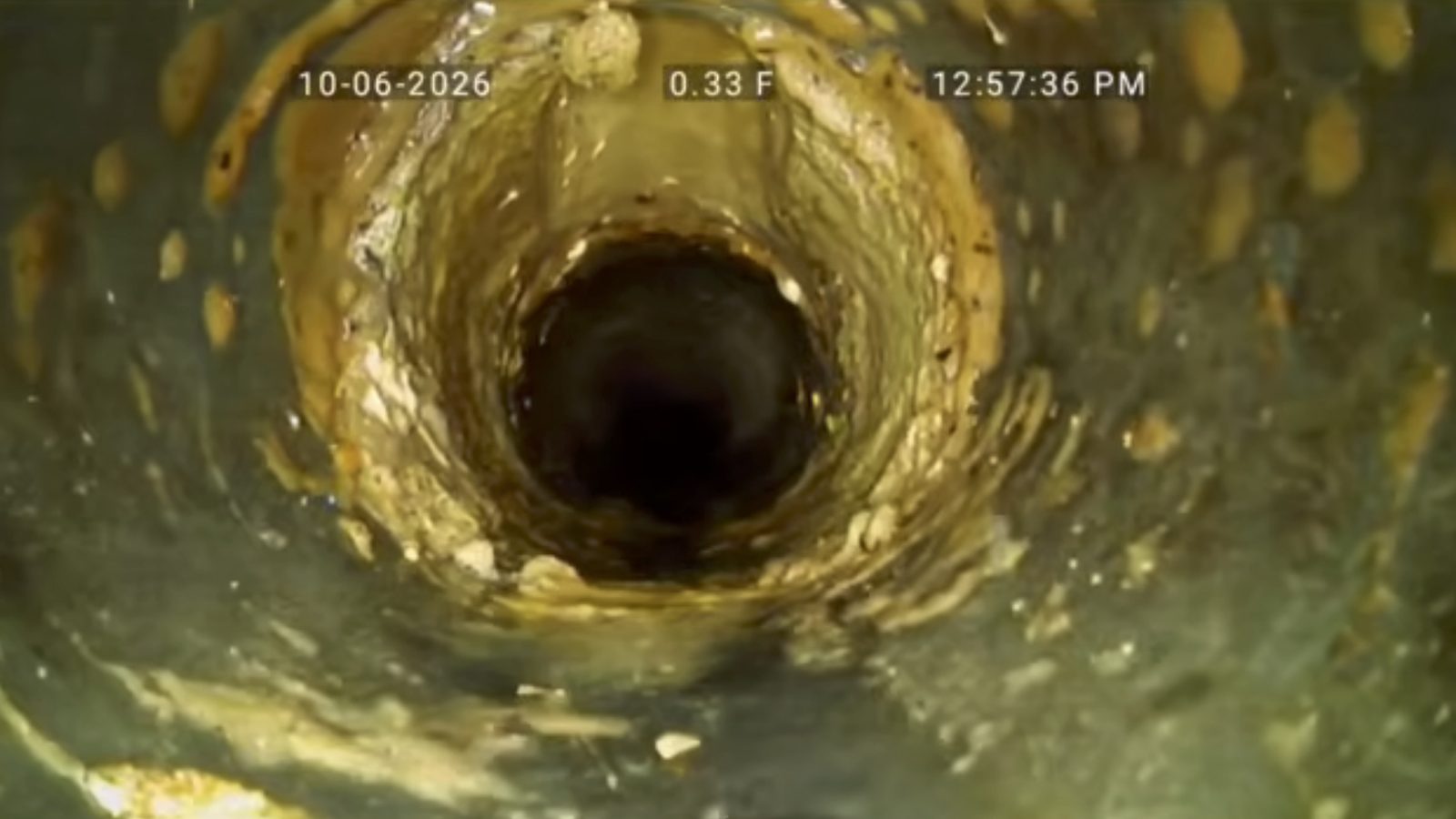
The grease starts right at the entry. A foot later, it gets worse.
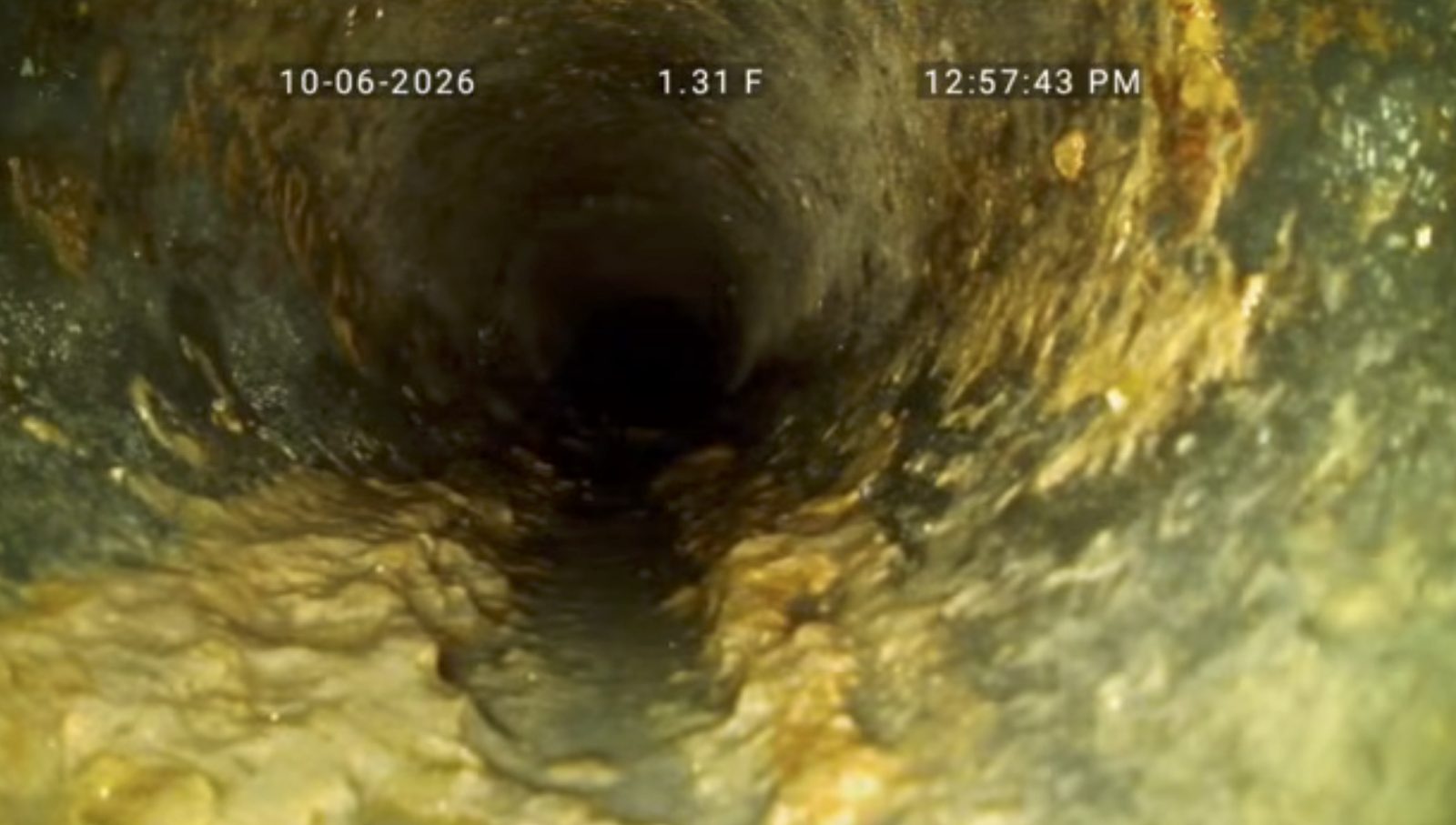
Past the kitchen connection the line clears up somewhat. Then, roughly 75 feet out, the buildup starts again.
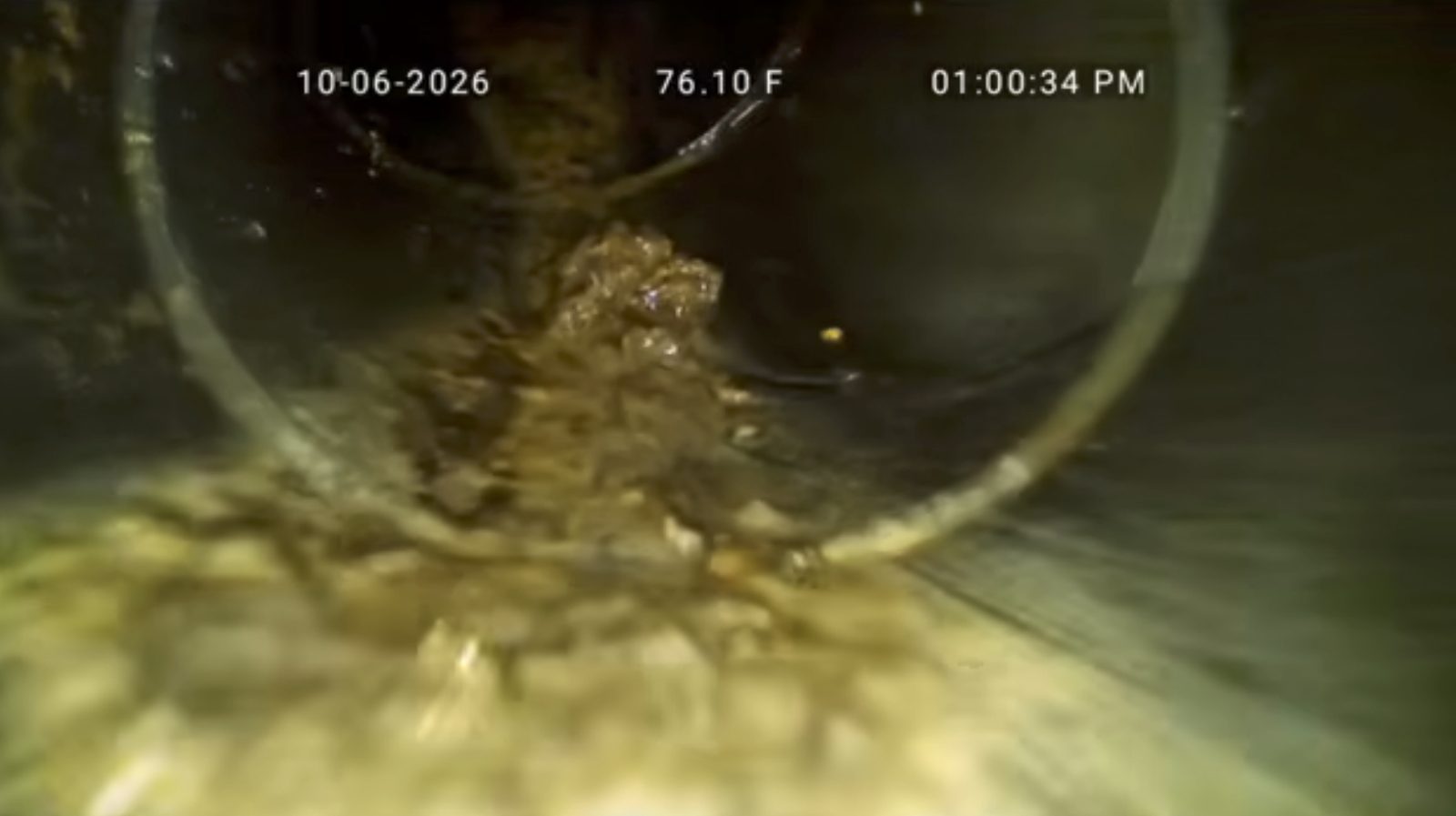
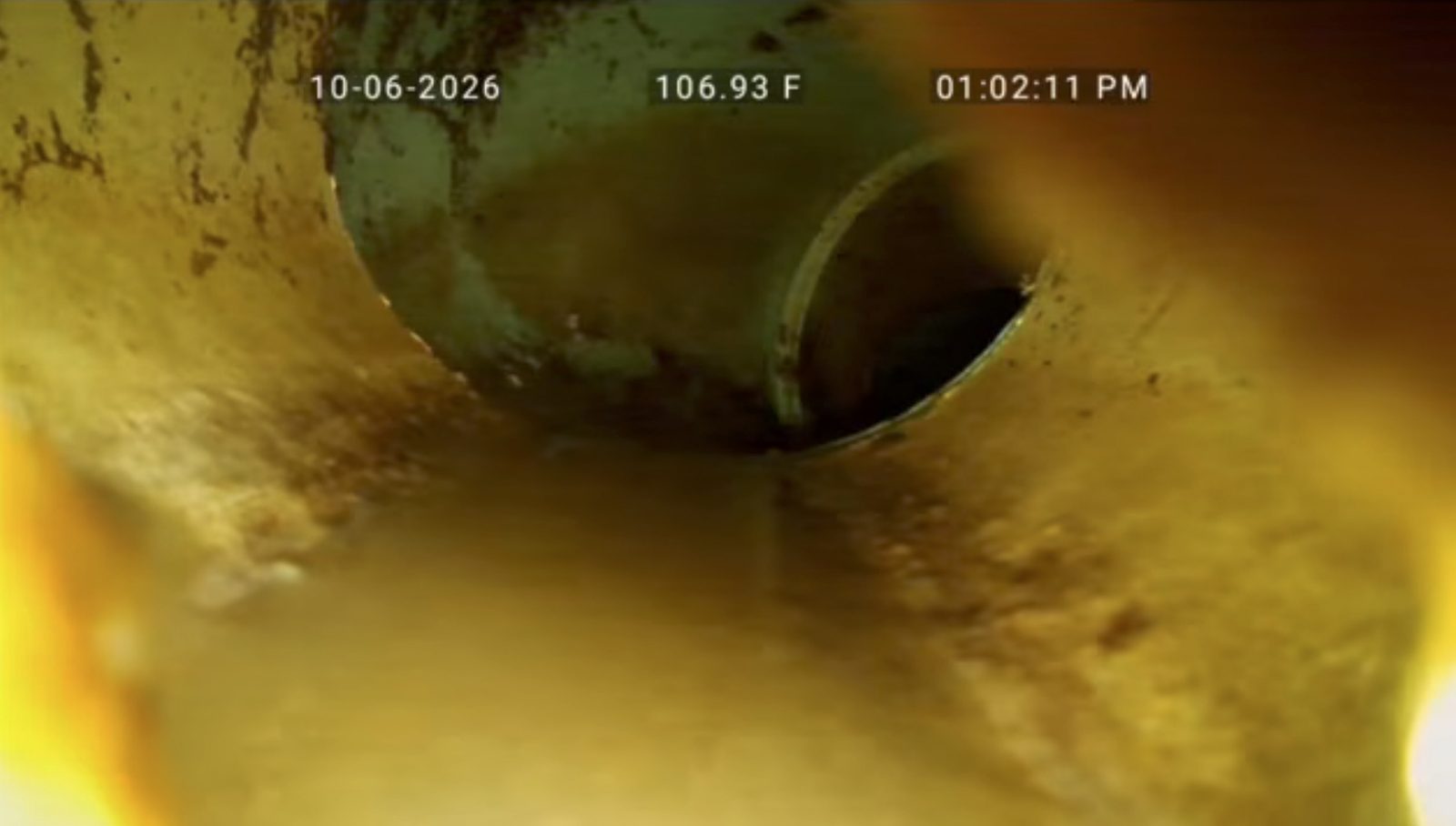
A coating like this does more than slow the water down. It catches paper and solids, which is how a slow drain turns into a backup. It also covers the pipe wall, so a crack or an offset joint underneath can stay hidden until the line is cleaned and scoped again.
Slow kitchen drain, or buying a home in Colton? Get the line on camera before it backs up.
Call 714-992-6363Why a snake isn’t enough for grease
A cable snake punches a hole through a grease blockage. The drains run again, but the walls are still coated, and the opening closes back up within weeks or months. Hydro jetting uses high-pressure water to scour the full circumference of the pipe, which is why it’s the usual fix for grease. There’s more on hydro jetting in the Inland Empire. A follow-up scope after jetting confirms the line is actually clean.
Where FlowPro IE fits
We run the camera and write the report. When a line needs jetting, we say so. We don’t jet lines we’ve scoped, and we take no referral fees in either direction, so the recommendation is about the pipe, not a sale. You get cable distances, surface marks, video and a PDF report to hand to any jetting company you choose.
Keeping grease out of the line
- Wipe greasy pans with a paper towel and throw it in the trash before washing.
- Pour cooled cooking grease into a can or jar and put it in the trash.
- Use a sink strainer, and scrape plates into the trash instead of the disposal.
- Don’t count on hot water or dish soap to flush grease through.
Grease and Colton homes
Colton is one of the older cities in San Bernardino County. Neighborhoods near downtown go back generations, and newer tracts sit toward the south end of town and Reche Canyon. Old or new, every lateral carries the same kitchen water, and grease builds up in plastic pipe just as readily as in clay or cast iron. Whether you’re buying, selling, or just tired of a slow kitchen sink, a scope shows what’s actually in the line.
We serve Colton and the rest of the Inland Empire, including San Bernardino, Rialto, Fontana, Redlands, Riverside and Yucaipa. Call 714-992-6363 to schedule a sewer scope. You’ll get an on-site walkthrough and a PDF report with photos, and every finding located by cable distance from the access point.