Corona has been one of the most active real estate markets in the Inland Empire for years. Buyers come for the relative affordability compared to Orange County, the access to the 91 and 15 freeways, and the established neighborhoods with mature landscaping. What they don't always come prepared for is the sewer line situation underneath some of those older homes.
A significant portion of Corona's residential housing was built in the 1970s and 1980s — which means sewer laterals that are now 40 to 50-plus years old, often cast iron or clay, running under yards full of mature trees. That combination — old pipe, decades of root growth, and hard Inland Empire soil that shifts with temperature — is precisely what we find problems with on the job.
A sewer scope inspection is how you find out what's actually down there before you buy. At FlowPro IE, we give you the full picture: live camera footage, an on-site walkthrough of our findings, and a detailed PDF report emailed the same day.
Corona's Housing Stock and What It Means for Sewer Lines
Corona grew rapidly in two main waves — the post-WWII era and again in the 1970s–90s as the city expanded into what had been citrus groves and agricultural land. Homes from those periods used pipe materials that were standard at the time: Orangeburg (a tar and paper composite used into the late 1960s), clay vitrified pipe, and cast iron. All three are now aging out.
Orangeburg pipe is particularly problematic — it was never meant to last more than 50 years, and it degrades from the inside out, eventually collapsing under soil pressure. Clay pipe joints, while durable when intact, are highly susceptible to root intrusion. Cast iron corrodes from the inside, building up scale that narrows the effective pipe diameter over time.
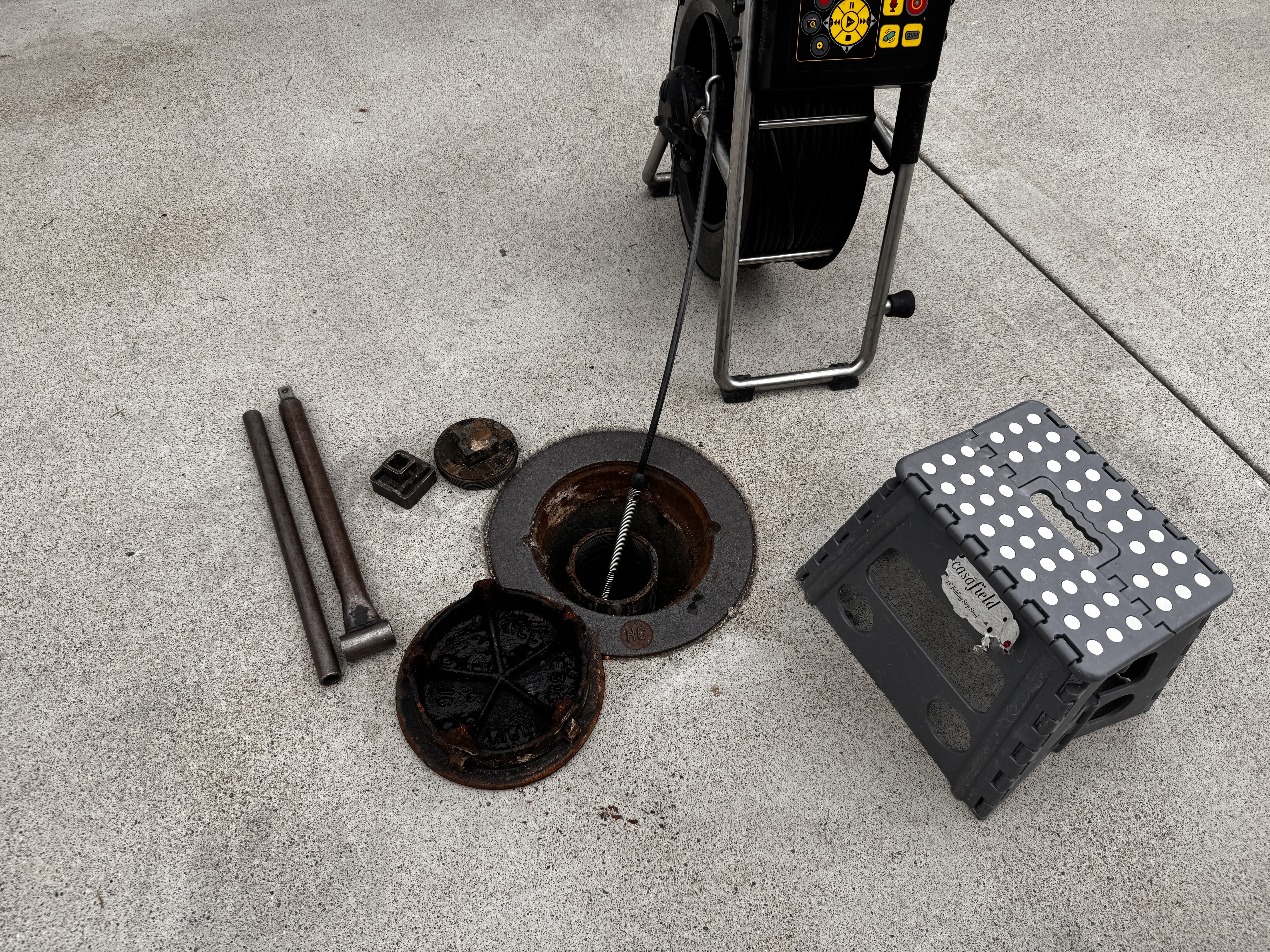
Corona buyers take note: A general home inspection does not include the sewer lateral. Your inspector will check the visible plumbing inside the house — not the 60 to 100 feet of underground pipe between your foundation and the city main. That requires a dedicated sewer scope.
What We Look For — and What We Find
Every sewer scope inspection covers the full length of the main lateral from the cleanout access point to the city connection. On a typical Corona property, that's anywhere from 50 to 120 feet depending on lot depth and where the city main runs.
The most common issues we find in Corona include:
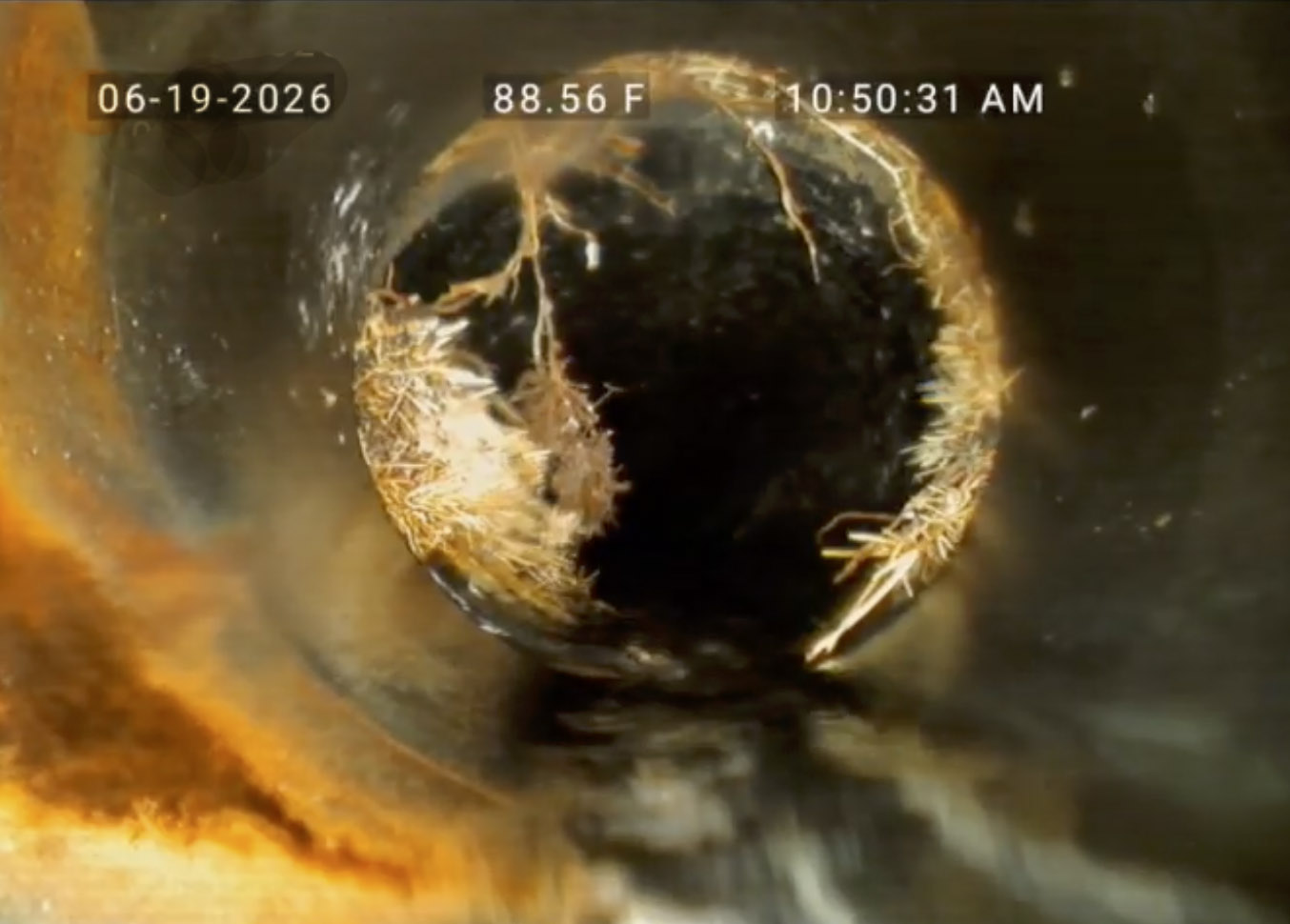
- Root intrusion — mature trees in Corona's established neighborhoods send roots long distances toward moisture, and older clay joints are exactly where they get in
- Pipe offsets — joints that have shifted due to the expansive clay soils common throughout Riverside County, creating lips where debris collects
- Scale buildup — cast iron lines from the 1970s–80s often have significant internal buildup that reduces flow and traps debris
- Bellied sections — low spots where wastewater pools, eventually causing recurring backups
- Deteriorating pipe walls — especially in Orangeburg or older clay lines near the end of their service life
The FlowPro IE Inspection Process
We keep the process simple and the communication clear. When we arrive at your Corona property, we locate the cleanout, deploy the camera, and you can watch the live feed in real time. We narrate what we're seeing — pipe material, joint condition, any intrusions, offsets, or buildup — as the camera travels the line.
When the scope is complete, we walk you through everything we found before we leave. Not after we drive away. Not in a report you'll receive three days later. Right there on-site, in plain language, so you can ask questions and understand exactly what you're looking at.
📄 Every Inspection Includes a Detailed PDF Report
After every sewer scope, FlowPro IE emails you a written PDF report with our findings, pipe condition assessment, notable observations by footage marker, and recommended next steps. This report is your documentation for negotiations, contractor bids, or your own records.
If you're in escrow, that report gives you clear, documented leverage — to request repairs before closing, negotiate a price reduction, or make an informed decision to walk away. If you're an existing homeowner, it tells you exactly what you have and what timeline you're working with for maintenance or replacement.
When to Schedule a Sewer Scope in Corona
The most straightforward trigger is a home purchase — especially for any property built before 1990. But a scope inspection also makes sense when:
- You're dealing with recurring slow drains or backups that seem to clear but keep coming back
- You hear gurgling from drains or toilets when running water elsewhere in the house
- There's a wet area or unusually lush patch of grass in the front yard near the sewer lateral
- You have large mature trees — eucalyptus, olive, or pine are frequent offenders — along the front of the property
- The home hasn't had a sewer scope inspection in more than 5–10 years
Serving Corona and the Greater Inland Empire
FlowPro IE serves all of Corona — from the older neighborhoods near Downtown and the West Side to the newer developments in South Corona near Dos Lagos. We're also throughout Riverside, San Bernardino, Moreno Valley, and surrounding communities across the Inland Empire.
Call us at 714-992-6363 to schedule your inspection or to ask questions before you book. We give you straight answers, not a sales pitch.
Schedule Your Sewer Scope in Corona
On-site walkthrough, same-day PDF report, and honest answers. That's the FlowPro IE difference.
714-992-6363 Call to Schedule