Fontana is a city of contrasts when it comes to its housing stock — you'll find newer tract developments built in the 2000s sitting a few blocks away from homes that date back to the 1960s and 1970s, with mature landscaping that's had decades to grow. Those older neighborhoods, particularly in central and north Fontana, share a common risk that most homeowners never think about: mature trees whose roots have had 40 to 60 years to find their way into aging sewer pipes.
At FlowProIE, we run sewer scope cameras through pipes throughout the Inland Empire every week. Tree root intrusion is the most common finding we document — and in Fontana's older residential areas, we see it regularly. The problem is almost always further along than homeowners expect by the time we first look.
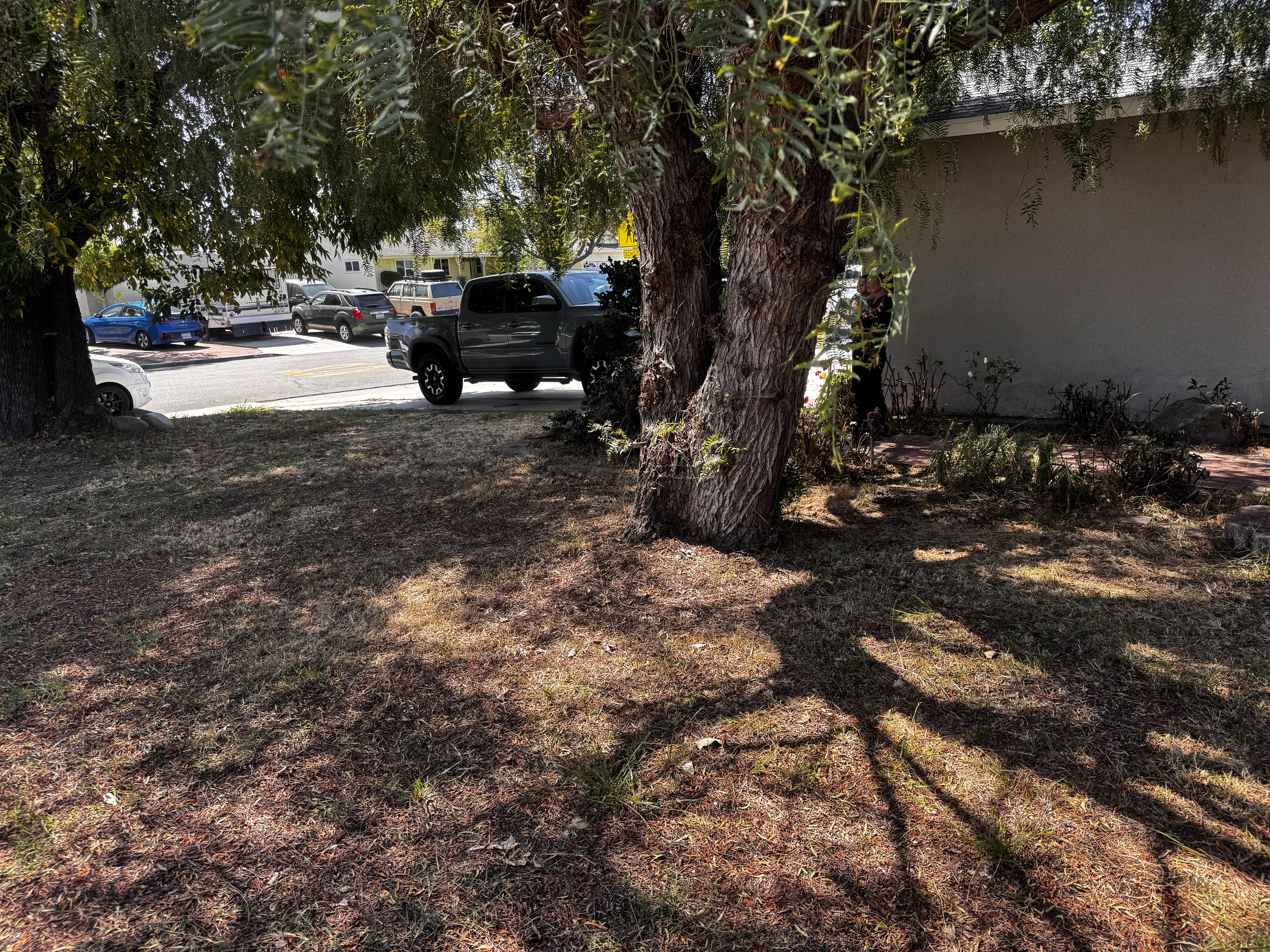
A mature tree this close to the home's sewer lateral is one of the primary risk factors for root intrusion in older Fontana neighborhoods. Surface roots visible above ground are a sign of an aggressive root system below.
Why Fontana Homes Face a Double Risk
Older Fontana homes — particularly those built before 1985 in neighborhoods around Sierra Avenue, Baseline, and the historic central district — were largely plumbed with clay or cast iron sewer laterals. Both materials hold up reasonably well when the pipe is intact, but after decades of Inland Empire ground movement, the occasional seismic tremor, and the expansion and contraction that comes with the region's hot summers, those older pipes develop cracks and loose joints.
That's where the IE's notoriously hard municipal water adds a compounding problem. Hard water — high in dissolved calcium and magnesium — leaves mineral scale buildup on the interior walls of sewer pipes over time. That scaling roughens the pipe surface, which makes it easier for roots to catch and grow once they find their way through a joint. Fontana's water consistently ranks among the harder municipal supplies in San Bernardino County, meaning this scale issue is more pronounced here than in many other parts of Southern California.
Add to that the region's dry summers — which drive tree roots to seek out any available moisture source, including the water flowing through your sewer line — and you have conditions that make root intrusion both common and fast-moving once it starts.
What the Camera Actually Shows
Early-stage root intrusion looks deceptively minor on a sewer scope camera: thin, white fibrous strands hanging from a joint inside the pipe. These are called feeder roots, and most homeowners who hear that description think it sounds manageable. It is — but only if it's caught early. Left untreated, those same strands catch debris passing through the line and begin forming a dense root mass. In advanced cases, the camera view is essentially blocked — a thick tangle of roots that has also cracked or fractured the pipe itself.
In Fontana's older neighborhoods, we also frequently see the effects of Inland Empire's hard water alongside root intrusion: significant mineral scale buildup that narrows the pipe's effective diameter even before the roots contribute. The combination of scaling and root intrusion means the line's capacity is reduced from two directions at once, which is why backups in these homes tend to happen with less warning than homeowners expect.
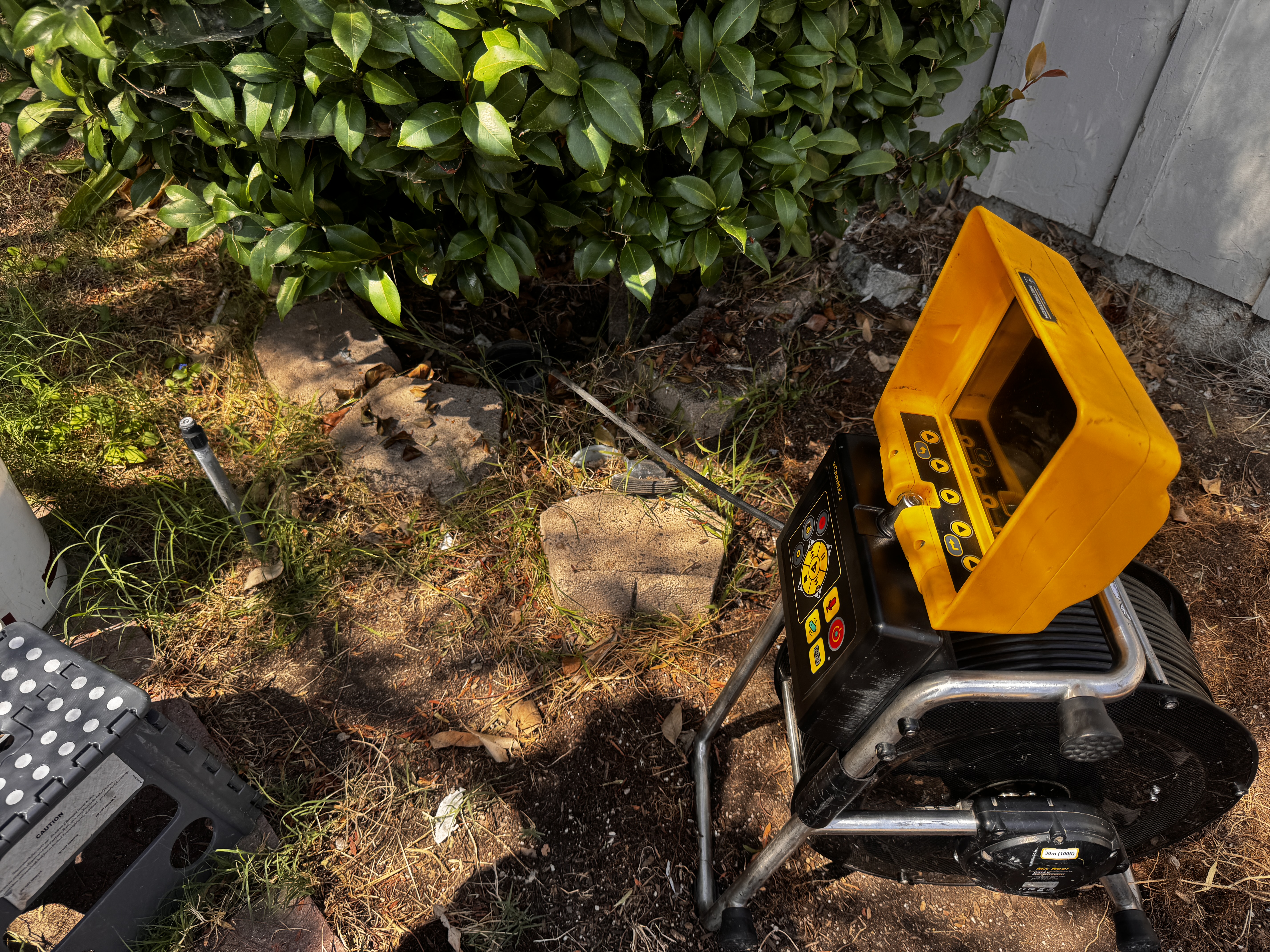
FlowProIE at a recent Fontana job — camera reel deployed at the cleanout access point, ready to run the full length of the lateral. Notice the shrubs right next to the line — exactly the kind of landscaping that puts older pipes at risk.
Warning Signs Fontana Homeowners Should Watch For
Common indicators that your sewer line may have root intrusion:
- Slow drains throughout the house — not isolated to one sink or shower
- Gurgling noises from toilets or floor drains when other plumbing is running
- Sewer odor near floor drains, in the yard, or around the cleanout location
- Patches of lawn or garden that are unusually lush or green without explanation
- A backup that snaking temporarily clears, but returns within weeks or months
- Mature trees within 20–30 feet of the home's cleanout or sewer lateral path
One important caveat: a significant number of Fontana homes we inspect have meaningful root intrusion with none of these symptoms present. The pipe can be substantially compromised — especially in older clay lines — well before drainage problems become noticeable inside the house. By the time you're dealing with recurring backups, the damage is usually much further along than it appears.
What FlowProIE Does Differently
Running a camera through a pipe is the beginning of the process, not the end. What matters to homeowners is what happens after we pull the camera out. Every FlowProIE inspection includes a clear, plain-language explanation of what we found — on-site, before we leave. We walk you through the footage, show you exactly where in the line we found anything of concern, and explain what it means in practical terms.
You'll also receive a detailed PDF report emailed to you the same day. That report documents our findings with footage references and is formatted so you can share it with a plumber, a real estate agent, or keep it as part of your home maintenance records. We don't hand you a verbal summary and disappear — you get something in writing that you actually own.
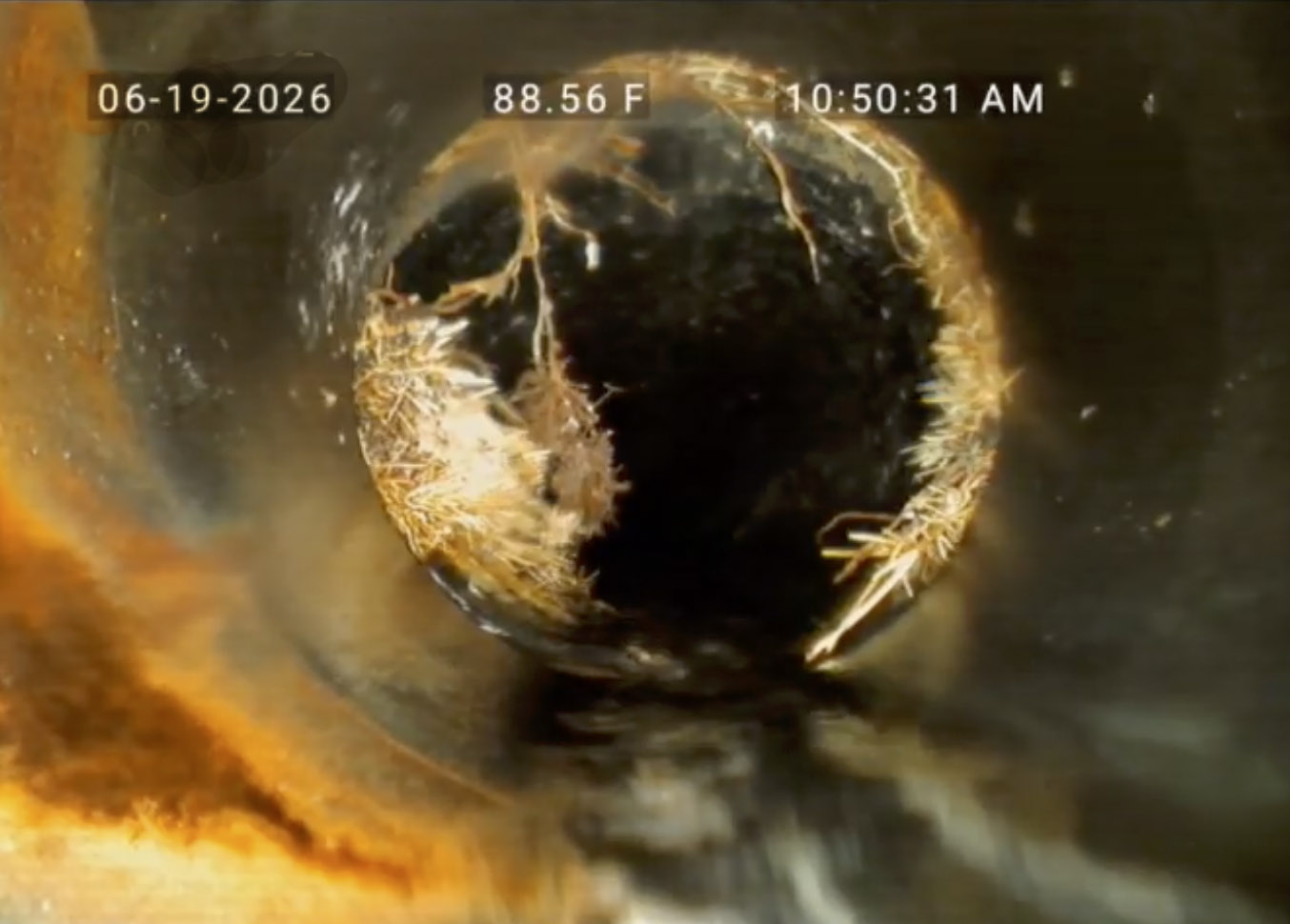
Root intrusion documented during a sewer scope inspection. Roots like these enter through cracked joints in older clay or cast iron pipe and grow until they obstruct or break the line entirely.
How Often Should Fontana Homeowners Inspect?
For homes built before 1985 with mature trees on the property, an inspection every two to three years is a sensible baseline. If you've already had root intrusion treated — through hydro jetting or mechanical cutting — follow-up inspections every 12 to 18 months help confirm the line is clear and catch any regrowth before it becomes a problem again.
Fontana homebuyers should treat a sewer scope as a standard part of due diligence on any property with significant tree coverage or pre-1985 construction. The inspection cost is a small fraction of what sewer lateral repair or replacement costs in San Bernardino County — and documented findings give you real leverage in price negotiations if something turns up.
FlowProIE serves Fontana and the entire Inland Empire. We provide clear on-site findings and a detailed PDF report after every inspection — no guesswork, no vague answers. Call or text us at 714-992-6363 to schedule.