Redlands has the widest spread of housing ages of any city we work in. Drive through the historic districts and you're looking at homes built in the 1890s and 1900s, back when Redlands was the center of the Southern California citrus industry. Head east or south and you're in tracts from the 1950s, the 1980s, the 2000s. Four different eras of plumbing practice, sometimes within a few blocks of each other.
That matters more than it sounds. The right approach on a century-old clay lateral is not the right approach on a 1990s ABS line, and a company that treats every Redlands address the same way is guessing. At FlowPro IE, we look at what's actually in the ground before recommending anything — and on older lines that usually means clearing the pipe first, then running the camera, so the footage shows the pipe instead of a wall of debris.
Every visit includes an on-site walkthrough of what we find, plus a detailed PDF report emailed the same day — documentation you can use for repairs, negotiations, or your own records.
Redlands' Housing Stock and Why It Matters
The city's oldest neighborhoods date to the citrus boom of the late 1880s and 1890s, and a remarkable number of those homes are still standing and occupied. Sewer laterals of that vintage were vitrified clay — short sections joined with mortar, which does its job for decades and then starts letting roots through at every joint. If a home in the historic core has never had its lateral replaced, it's running on pipe that's well over a century old.
Post-war tracts brought clay and cast iron, plus Orangeburg on some builds from the late 1940s through the early 1970s. Cast iron corrodes from the inside, narrowing the effective diameter long before it fully blocks. Orangeburg — essentially tar-impregnated wood fiber — deforms under load and is the one material where we'll tell you replacement is the only real answer.
Homes from the 1980s onward generally run ABS or PVC, which is far more durable. Those lines still fail, but the failure mode is different: joint separation and bellied sections from ground settlement rather than material breakdown.
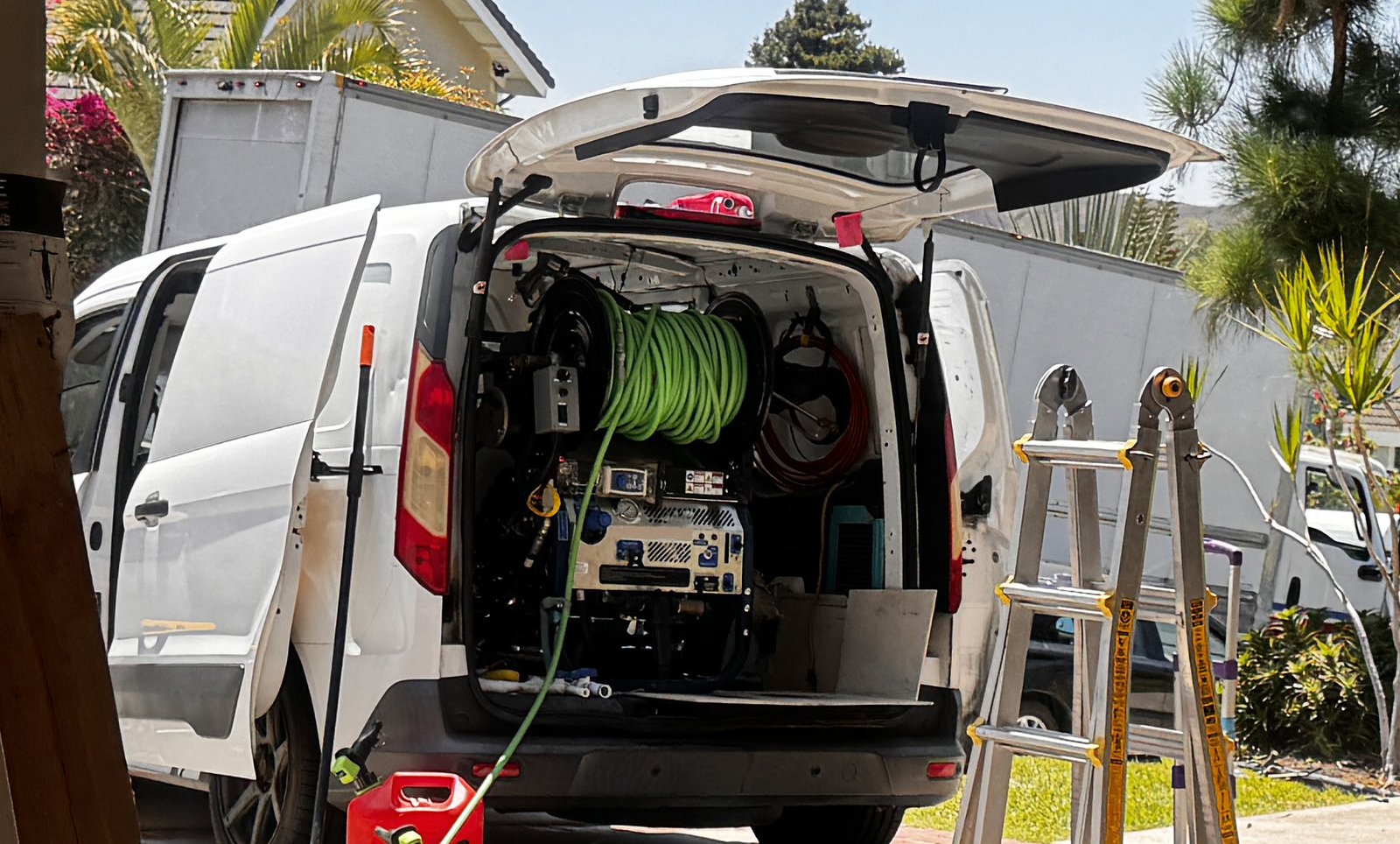
Redlands homeowners take note: The city maintains the sewer mains under the street, but the lateral running from your house out to that main is yours. A standard home inspection doesn't cover it, and on a historic-district property that can be the single largest unknown in the whole transaction.
The Tree Canopy Cuts Both Ways
Redlands is genuinely one of the most beautiful cities in the Inland Empire, and a lot of that comes down to the mature trees lining its older streets — pepper trees, palms, camphors, and the remaining citrus. Those trees have had eighty, ninety, a hundred years to grow.
Roots follow water. A hairline crack or a slightly open mortar joint lets enough moisture into the surrounding soil that roots will find it, work through the gap, and then keep growing inside the pipe where conditions are ideal year-round. On a clay lateral running under a century-old parkway tree, this isn't a possibility — it's a matter of how much.
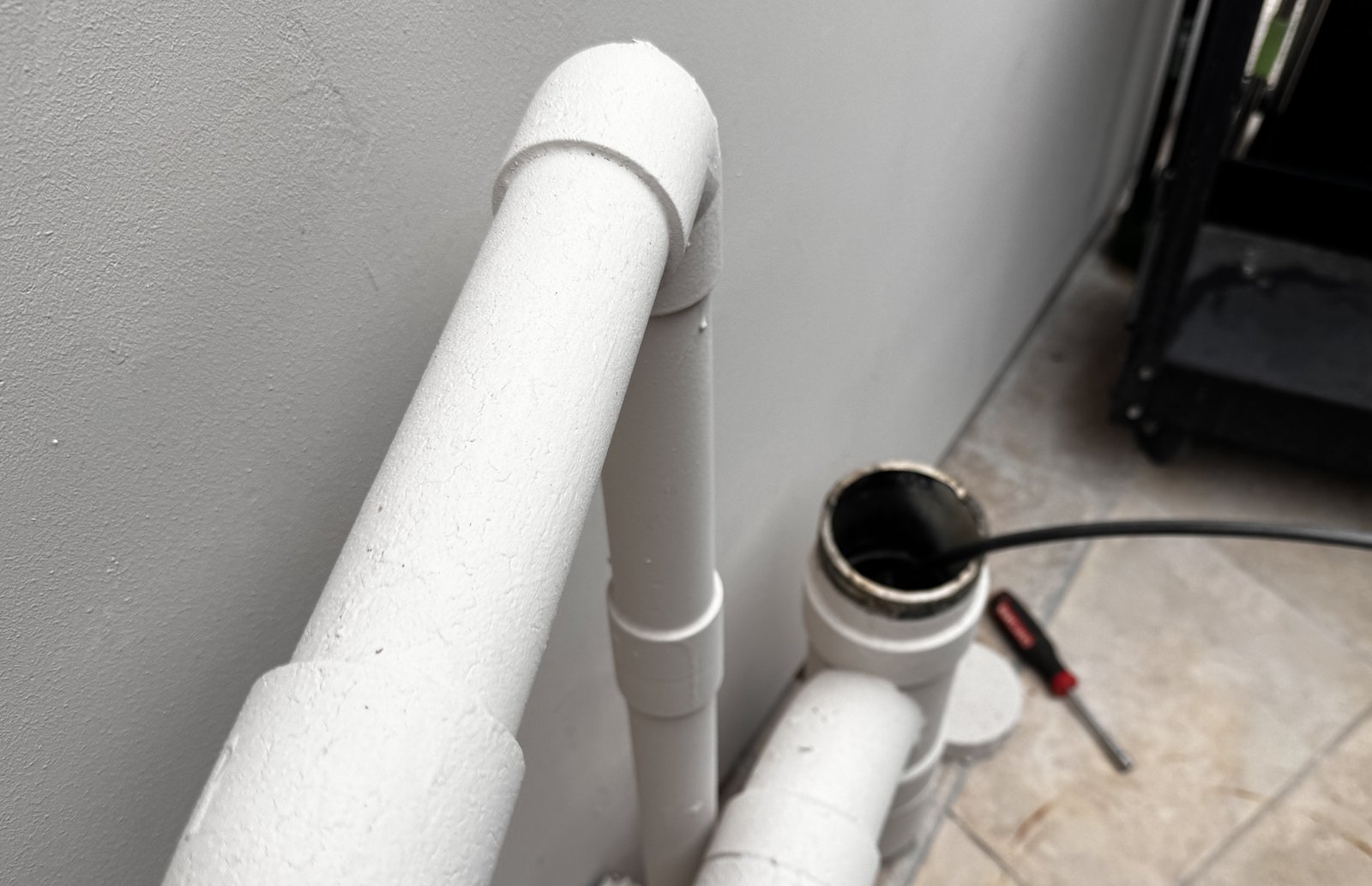
How Hydro Jetting and the Scope Work Together
Hydro jetting uses high-pressure water — typically 3,000 to 4,000 PSI — delivered through a specialized nozzle that scours the full circumference of the pipe wall. Unlike a mechanical snake, which punches a hole through a clog and leaves the rest behind, jetting clears grease, root hair, scale, and sediment from the whole line, restoring flow closer to the pipe's original diameter.
Pressure gets matched to the pipe. This matters more in Redlands than almost anywhere else we work, because the difference between a 1990s ABS line and a 1905 clay one is the difference between routine maintenance and a line we may not jet at all. If the camera or the feel of the line says back off, we back off and tell you why. Nobody benefits from us turning a repairable problem into an excavation.
Once the line is clear, we run the camera the full length and you watch the live feed with us. We narrate it as it goes — pipe material, joint condition, remaining root growth, offsets, wall damage, and where each of those sits by footage marker.
Common Issues We Find in Redlands
- Root intrusion at clay joints — the dominant issue in the historic districts, often at multiple points along a single run
- Scale and corrosion — built up inside cast iron lines, narrowing flow and catching solids
- Orangeburg deformation — pipe that has flattened out of round on some post-war builds
- Pipe offsets — joints shifted by ground settlement, a factor across the sloping alluvial ground below the foothills
- Bellied sections — low spots holding standing water, a common cause of repeat backups
- Unpermitted work — additions and remodels tied into the lateral in ways the camera reveals and the paperwork doesn't
📄 Every Inspection Includes a Detailed PDF Report
After every job, FlowPro IE emails you a written PDF report with our findings, pipe condition assessment, notable observations by footage marker, and recommended next steps — documentation you can hand to a contractor, use in negotiations, or keep for your records.
If you're buying in Redlands, that report is worth real money at the negotiating table. Historic properties carry a premium, and a documented sewer condition is one of the few concrete numbers in an otherwise emotional purchase. If you already own the home, it tells you what you're working with and roughly what timeline you're on.
When to Schedule Hydro Jetting or a Sewer Scope in Redlands
- You're in escrow on anything in the historic districts, regardless of how well the house shows
- You're buying a home built before 1980 anywhere in the city
- Drains are slow throughout the house, or backups return within months of a snaking
- You hear gurgling from drains or toilets when water runs elsewhere
- There's a green or soggy patch of lawn along the path of the lateral
- Large mature trees sit between your house and the street
- The line hasn't been serviced or inspected in five or more years
Serving Redlands and the Surrounding Area
FlowPro IE works throughout Redlands — from the historic neighborhoods around Smiley Park and the downtown core out to the newer developments toward the east side. We're also active in San Bernardino, Rialto, Fontana, Riverside, and the rest of the Inland Empire.
Call us at 714-992-6363 to schedule your inspection or ask questions before booking. Straight answers, not a sales pitch.
Schedule Hydro Jetting or a Sewer Scope in Redlands
On-site walkthrough, same-day PDF report, and honest answers. That's the FlowPro IE difference.
714-992-6363 Call to Schedule