Sewer Line Locating in Moreno Valley, CA: Know the Route Before the Shovel
Moreno Valley grew faster than almost anywhere in the Inland Empire, and it grew in layers. The older Sunnymead and Edgemont neighborhoods were established long before the city incorporated in 1984. The tracts that filled in through the late eighties and nineties came later, built by different developers working to different plans. Two houses a few streets apart can have laterals that run nothing alike.
That is the practical problem with digging in this city. Nobody hands you a map of your own sewer line, and the assumption that it runs straight from the house to the street is wrong often enough to be expensive. Electronic locating answers the question in the time it takes to walk the yard. Call 714-992-6363 to get it scheduled.
Why the Route Is Rarely Obvious
Long runs are the first reason. On the larger parcels north of the 60 and out toward the eastern edge of the city, a house can sit well back from the street. A lateral covering that distance rarely travels in a straight line — it bends around what was already in the ground when it was installed, and those decisions were made decades ago by people who are no longer available to ask.
Additions are the second. A house that has been extended, re-plumbed, or had a bathroom added has usually had its drainage reworked, and the new run seldom follows the old one. Permits, where they exist, tend to describe what was built above ground rather than what was buried beneath it.
Then there is the soil. Ground through much of the valley shifts with the seasons, and pipe installed on one alignment does not necessarily stay there. A line that ran true in 1990 may sit somewhere slightly different today.
How the Trace Works
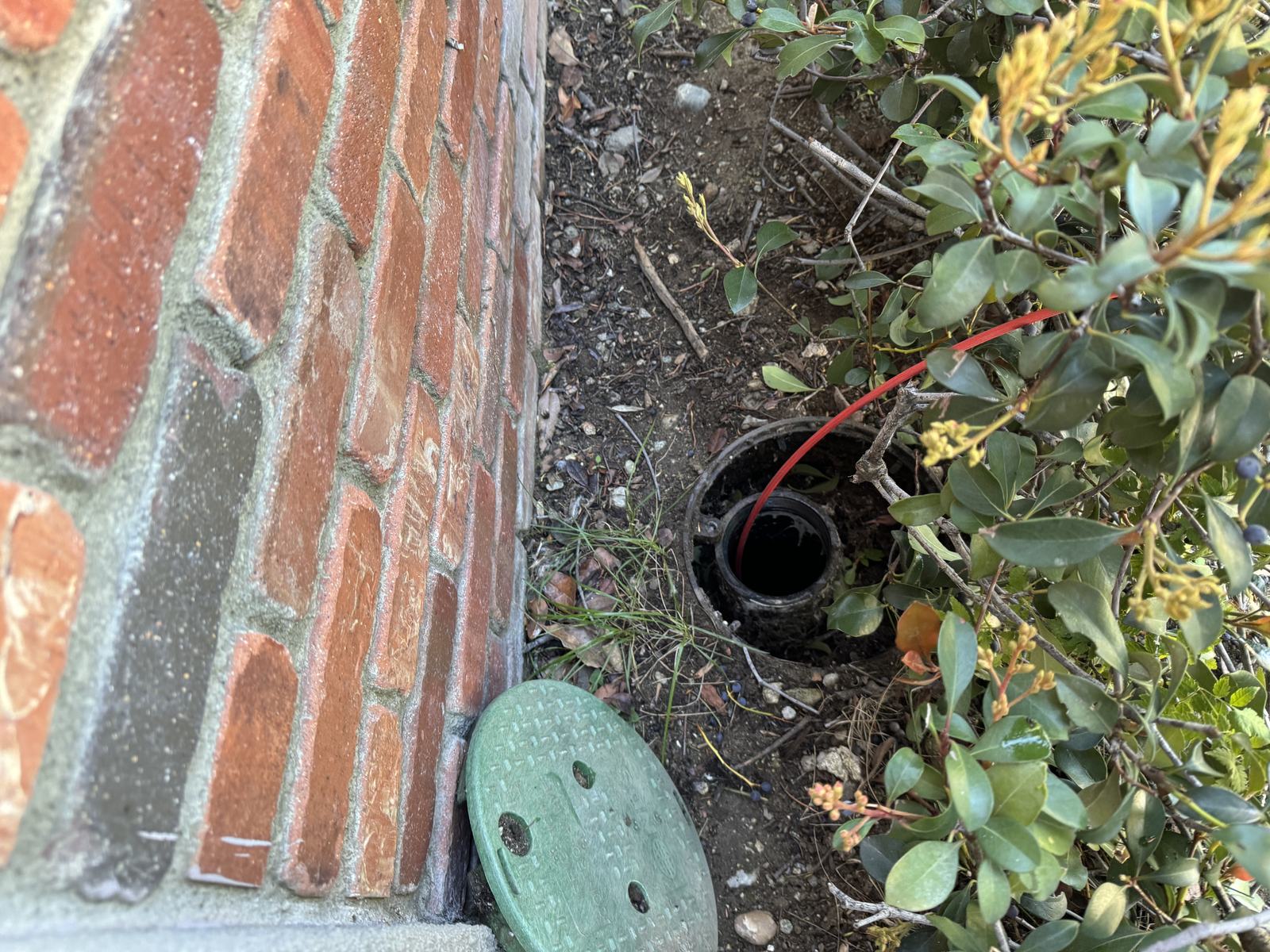
We send a transmitting sonde down the line and follow it from the surface with a handheld receiver. The receiver responds to the signal below it, and the operator works the yard until the reading peaks. That peak is the line. We mark it in paint, move along, and repeat until the route is laid out across the ground in front of you.
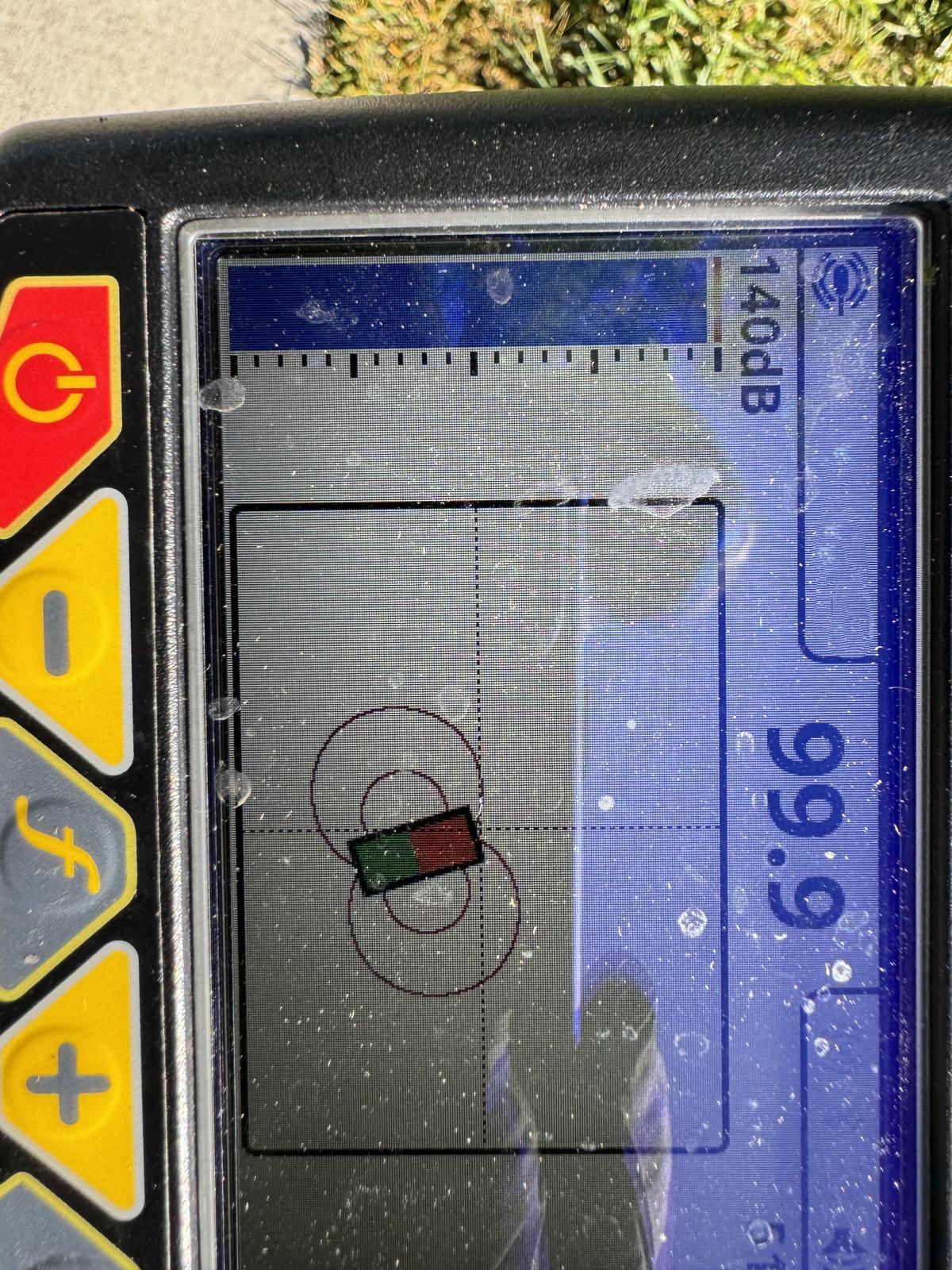
We also report the cable footage from the access point, which is the number that matters when you are matching a camera finding to a spot in the yard. A scope tells you there is a defect at a given footage. The locate turns that footage into a painted mark you can stand on.
Where This Saves Real Money
- ADUs, additions, and slabs. A lateral running under a new foundation is not a problem you fix afterward without demolition.
- Pools, spas, and deep landscaping. Excavation equipment moves faster than anyone can react to a surprise. Paint marks are the safeguard.
- Patios, driveways, and RV pads. Anything that puts permanent hardscape over an unmarked line makes the next repair far more expensive than it needed to be.
- Targeting a known defect. One deliberate hole instead of an exploratory trench across the front yard.
- Buying a property. On an older parcel, knowing where the lateral runs is worth having alongside knowing its condition.
Pair it with a camera inspection. The scope tells you the condition of the pipe. The locate tells you where that pipe is. Run both in one visit and you leave with the full picture instead of half of it.
What You Walk Away With
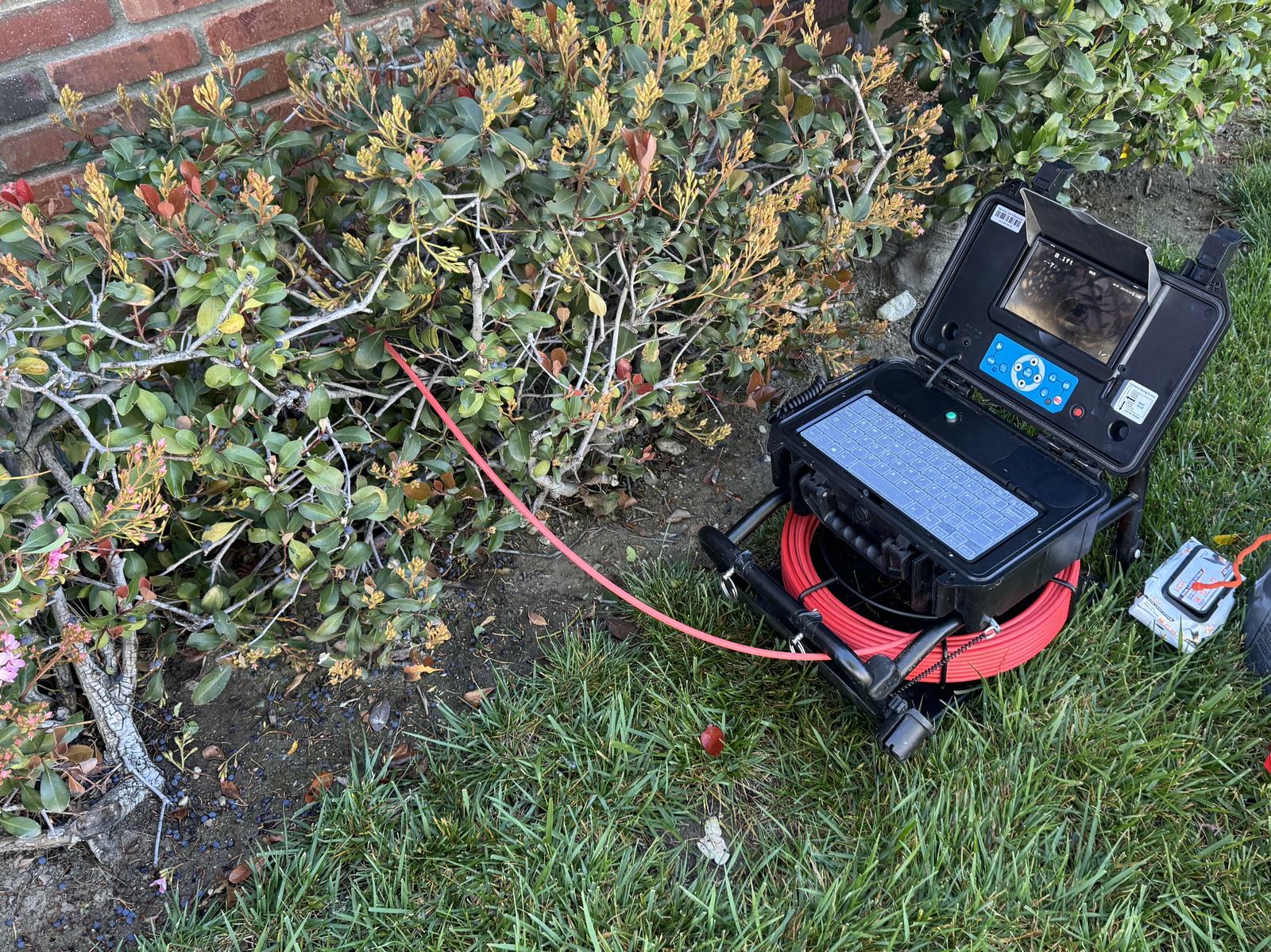
You get surface marks showing the route across your property, and the cable footage to the points that matter. When we pair the locate with a camera inspection, you also get an on-site walkthrough — we show you the footage and explain what it means without the jargon — plus a detailed PDF report emailed to you afterward.
Keep that report. Contractors bid tighter against documented conditions than against unknowns, and a mapped lateral stays useful every time you touch the property again.
Call 714-992-6363 to schedule, or just to ask what would make sense for your property before you book anything.
Get Your Sewer Line Located in Moreno Valley
Serving Moreno Valley, Riverside, Jurupa Valley, Corona, and communities across the Inland Empire.
Call 714-992-6363