Almost everything written about sewer line failure is about old pipe. Century-old clay, corroded cast iron, roots working through mortar joints. It is good information, and in Chino Hills most of it does not apply.
Chino Hills is a young city by Inland Empire standards. The bulk of its housing went up from the mid-1980s onward, which means most laterals here are ABS or PVC — modern materials, solvent-welded, resistant to corrosion and far tougher against roots than anything that came before. Homeowners reasonably conclude their sewer line is not something they need to think about.
Then the line backs up anyway. The reason has nothing to do with the pipe material and everything to do with what the pipe was laid in.
Hillside Grading Is the Whole Story
Chino Hills was built into hills. Creating buildable lots meant substantial cut-and-fill grading — carving material off high ground and compacting it into the low spots. That engineering is sound, but compacted fill behaves differently from native soil. It continues settling for years, sometimes decades, and it does not settle evenly.
The region's expansive clay soils compound it. Clay swells when it takes on water and shrinks as it dries, and Southern California's wet-winter, bone-dry-summer cycle drives that movement hard every year. Ground under a Chino Hills lateral is in slow, continuous motion.
A sewer lateral depends on consistent slope. It needs a steady fall — usually about a quarter inch per foot — to carry solids. The pipe does not have to break to stop working. It only has to stop being straight.
Bellies, Offsets, and Separated Joints
Three failure modes account for most of what we document on newer hillside laterals.
Bellies are the most common. A section settles lower than the pipe on either side, creating a dip. Water pools there instead of flowing through. Solids drop out of suspension in the standing water and accumulate. The pipe is undamaged — it is simply the wrong shape now, and it will keep catching debris until something is done about it.
Offsets happen when differential settlement shifts one pipe section relative to the next, leaving a lip at the joint. Every solid passing through catches on that lip.
Separated joints occur when movement pulls a solvent-welded connection apart far enough to open a gap. Water escapes into the soil, and soil migrates into the pipe. This one accelerates: the escaping water softens the surrounding ground, which allows more movement, which widens the gap.
Worth knowing: None of these show up on a standard home inspection. Inspectors assess what they can see, and the lateral is buried. On a hillside lot, grading history is precisely the thing a visual inspection cannot tell you anything about.
Why Snaking Keeps Not Working
Here is the pattern we hear constantly. The line backs up. A plumber snakes it. It drains fine for a few months. It backs up again. Repeat, two or three times a year, indefinitely.
A snake punches a hole through an obstruction. On a line with a root ball that can be enough. On a bellied line there is no obstruction to punch through — there is a low spot that refills with the next load of solids. Clearing it treats the symptom on a schedule set by the defect.
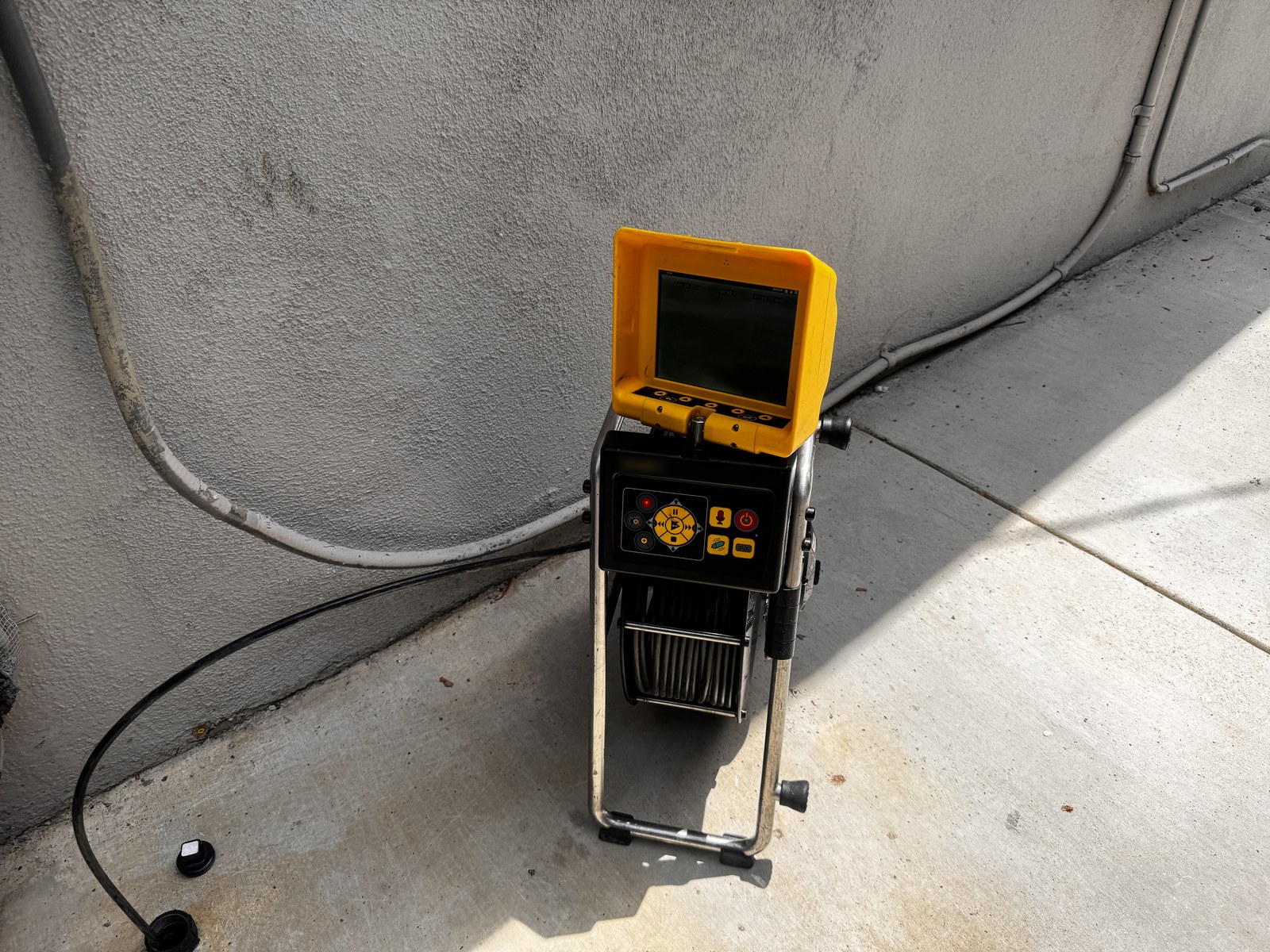
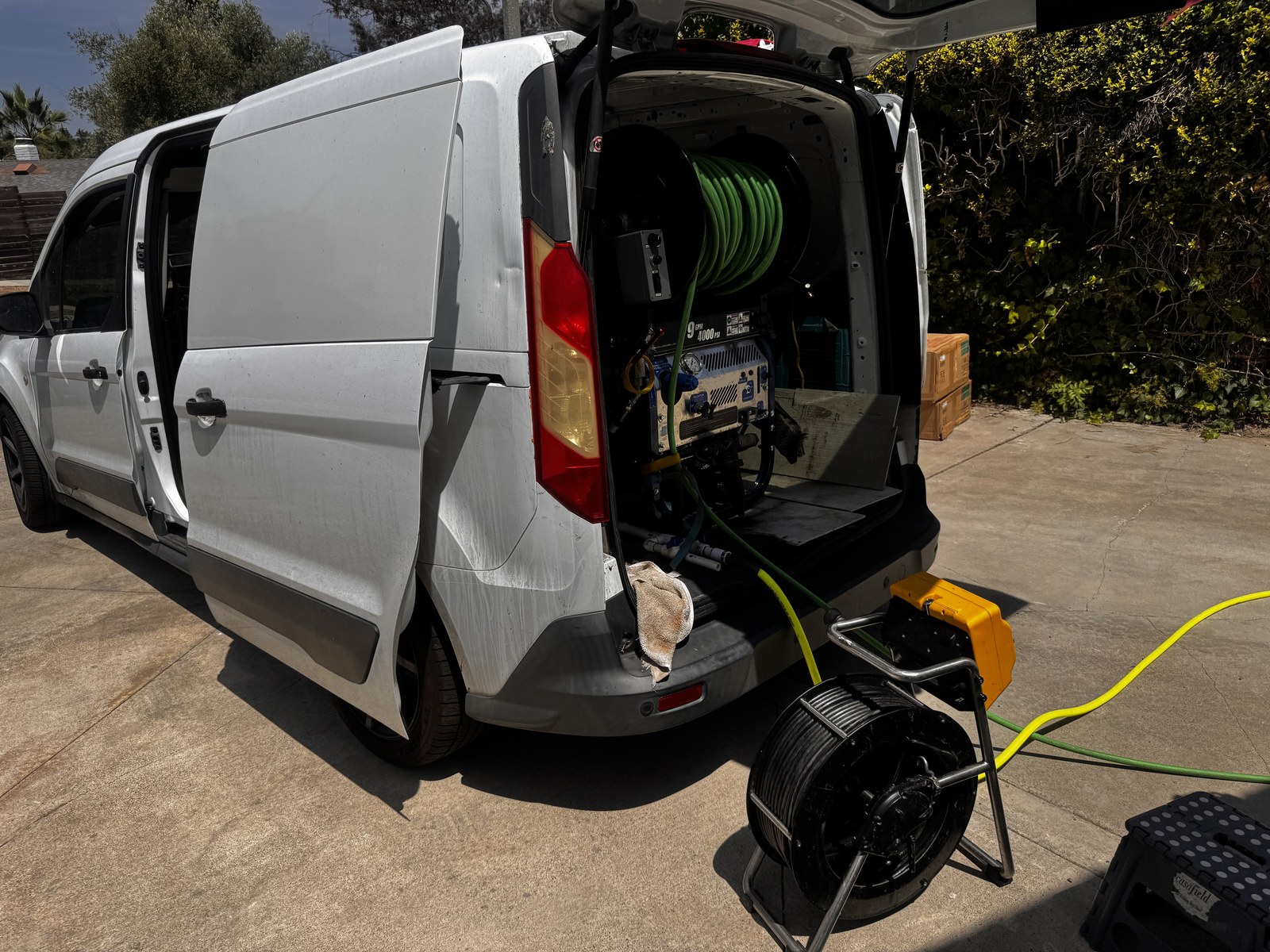
A camera ends the guessing. You see the belly, you see how deep it holds, you see exactly how far down the line it sits. Then the conversation becomes what to do about it rather than when it will happen again.
When a Chino Hills Scope Makes Sense
- You are in escrow on any hillside lot, regardless of the home's age
- Backups keep returning after snaking — the classic belly signature
- Drains are slow across multiple fixtures rather than one
- Gurgling from toilets or floor drains when water runs elsewhere
- A soggy or unusually green patch of lawn along the lateral's path
- Visible settlement elsewhere on the property — hairline stucco cracks, doors out of square, separating hardscape
That last one is the tell most people miss. Settlement is not selective. Ground that moved enough to crack a patio slab moved under the sewer line too.
Every Inspection Includes a Detailed PDF Report
We walk you through the findings on-site, in plain language, before we leave. You also get a written PDF report emailed the same day — pipe condition, observations by footage marker, and recommended next steps. Documentation you can hand a contractor, use in a negotiation, or keep for your records.
For buyers this matters more in Chino Hills than in older markets, because the assumption runs the other way. A 1995 build reads as low-risk, so nobody scopes it, so nobody finds the belly until after closing. Documented findings before you sign are leverage.
Call us at 714-992-6363 to schedule or just to ask questions before booking. Straight answers, not a sales pitch.
Schedule a Sewer Scope Inspection in Chino Hills
On-site walkthrough, same-day PDF report, honest answers about what we find.
714-992-6363 Call to Schedule