Norco is not a normal residential market and its plumbing isn't either. Half-acre minimum lots, livestock kept on the property, trails instead of sidewalks along much of the city. Horsetown USA is a real designation, not a slogan someone printed on a sign.
That character has a consequence almost nobody discusses until a line backs up: the drains on a horse property carry material they were never designed to carry, and then they carry it a long way before it reaches the main.
What Actually Goes Down a Horse Property Drain
A residential lateral is engineered for wastewater and organic solids that break down. A wash rack sends it something quite different — sand and grit rinsed off legs and hooves, shavings, hair, and fine sediment tracked in from arena footing.
Sand is the real problem. It doesn't break down, doesn't dissolve, and is heavier than everything else in the line. It travels only as long as the water is moving fast enough to carry it. The moment flow slows, it drops out and stays where it landed.
Then It Has to Travel a Long Way
On a half-acre-plus lot the lateral can run well over a hundred feet from the house to the connection at the street. Compare that to a tract home in Corona or Eastvale where the same run might be thirty-five feet.
Every additional foot is another opportunity for solids to settle, and every additional joint is another place the pipe can shift. Add the Inland Empire's expansive clay soil, which swells through wet winters and shrinks through dry summers, and you get slow changes in grade over decades. A lateral only needs to lose its consistent fall to stop moving solids reliably. It never has to actually break.
Why Snaking Keeps Not Holding
The pattern is familiar. The line slows. A plumber cables it. It runs well for a few months. It slows again. Repeat, indefinitely.
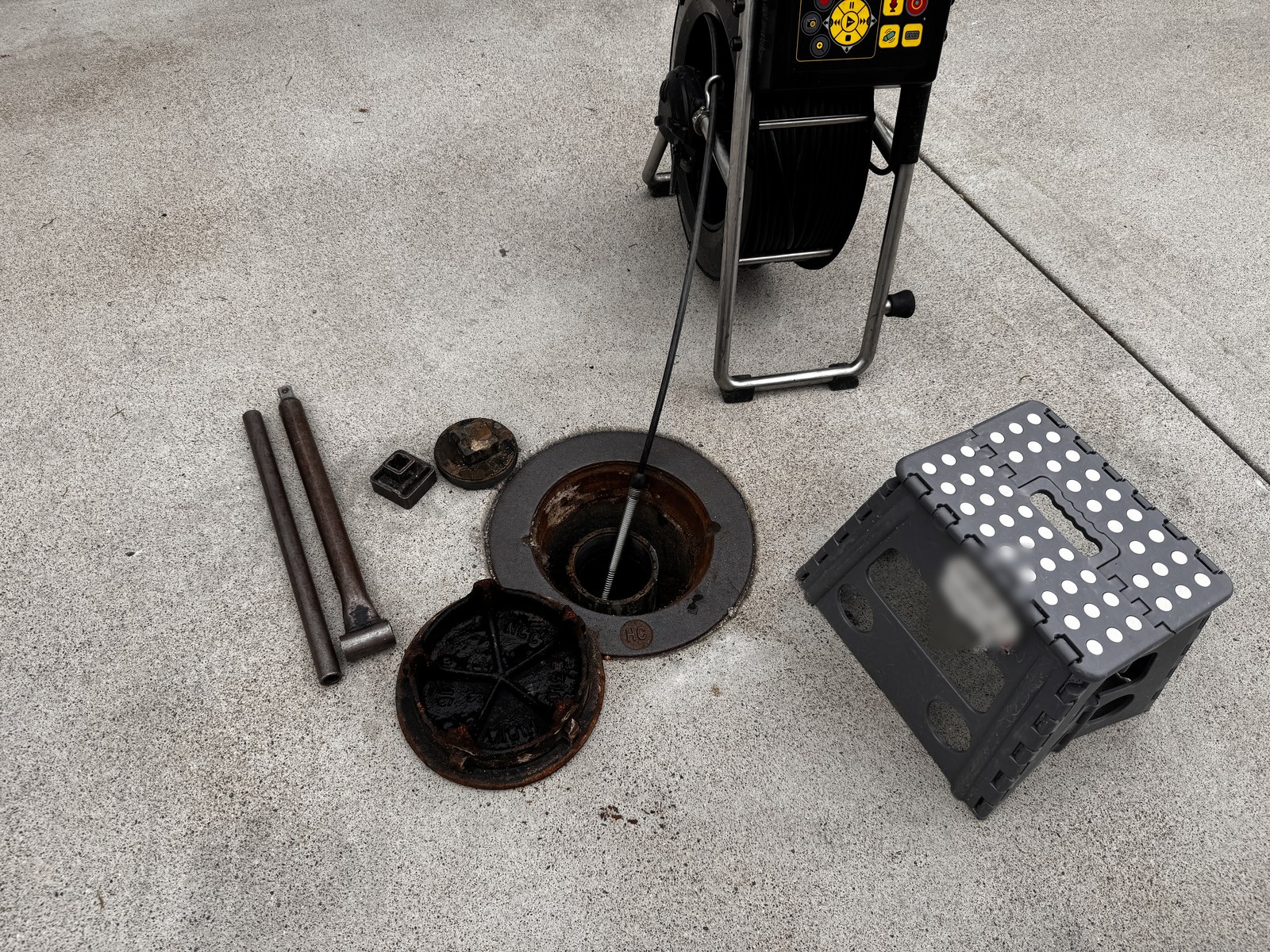
A cable is good at punching a hole through an obstruction. It is poor at removing accumulated sand and sediment from a low spot, because there is no single blockage to break — there is a long section of pipe holding material that refills as soon as normal use resumes. Clearing it treats the symptom on a schedule the defect sets.
Roots, Too
Large lots mean mature trees, and irrigated pasture keeps soil moisture high year-round. That combination pulls roots toward any opening in the line.
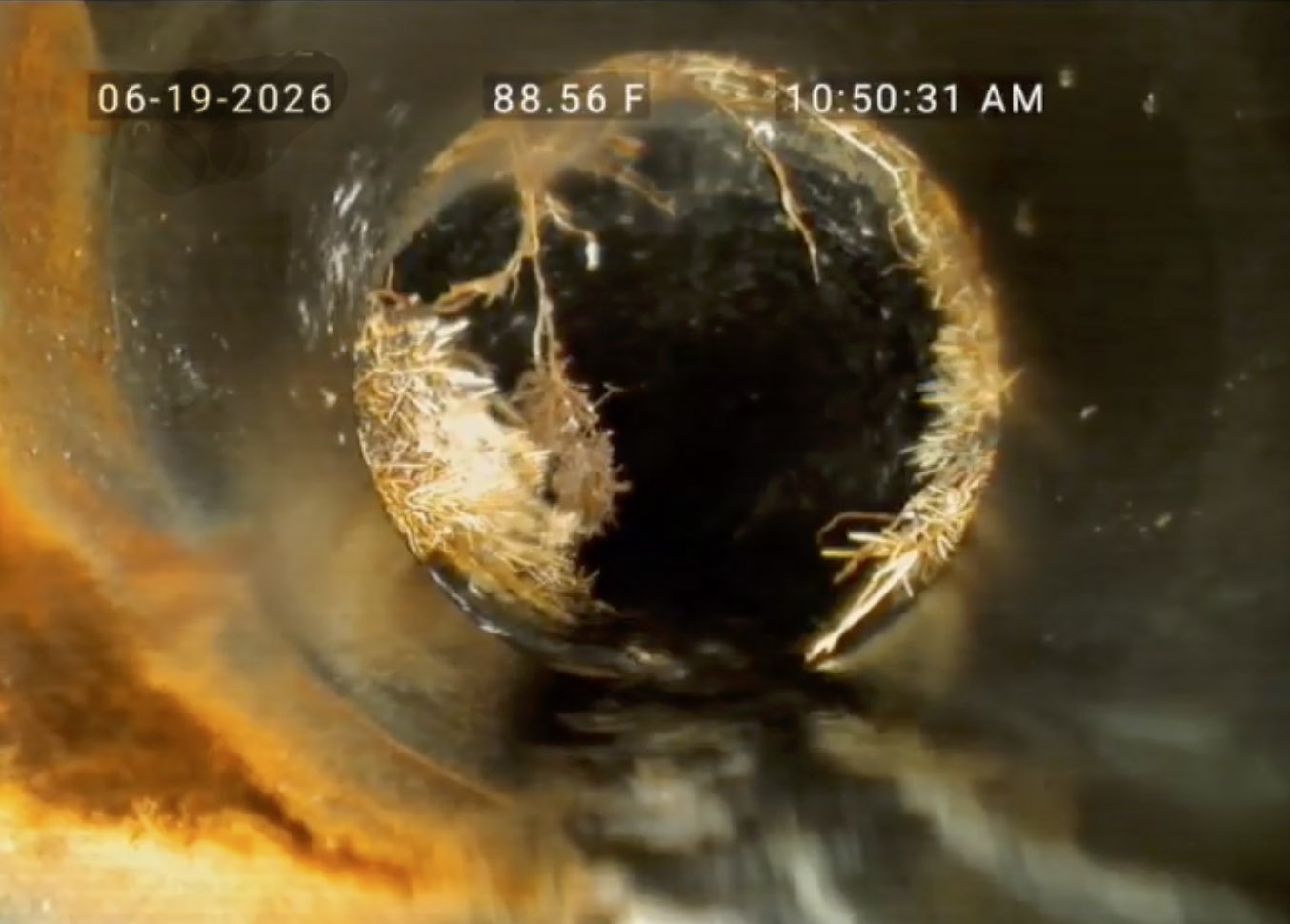
This is why root problems return on a schedule. Cabling cuts the growth back, but the entry point is still there and the moisture is still there. Until the joint is addressed, the roots come back.
Every Inspection Includes a Detailed PDF Report
We walk you through the findings on site, in plain language, before we leave. You also get a written PDF report emailed the same day — pipe condition, observations noted by footage marker, and recommended next steps. On a lateral this long, that footage log is the document that keeps a repair from turning into exploratory digging.
When a Norco Scope Makes Sense
- You're in escrow on any acreage property, regardless of the home's age
- The property has a wash rack, barn sink, or any drain that handles livestock washdown
- Backups keep returning after cabling, with a shortening interval
- Drains are slow across multiple fixtures rather than just one
- A soggy or unusually green strip runs along the path of the lateral
- Nobody has ever put a camera down the line and you don't know its material or condition
Serving Norco and the Inland Empire
FlowPro IE scopes properties throughout Norco — the acreage off Hamner and Sixth, the hillside parcels on the Corona side, and the smaller lots in the older sections near the center of town. Call us at 714-992-6363 to schedule or just to ask questions before booking. Straight answers, not a sales pitch.
Schedule a Sewer Scope in Norco
On-site walkthrough, same-day PDF report, honest answers about what we find.
714-992-6363 Call to Schedule