Ontario is really two housing stocks wearing one city name, and the difference matters a great deal to what is under the front yard.
North of the 60, the older neighborhoods have laterals that have been in the ground for sixty, seventy, in places eighty years — clay and cast iron, jointed every few feet, surrounded by decades of root growth. South, in the newer development, the pipe is modern plastic and the trees are young. Same city, same purchase paperwork, completely different risk profile.
A sewer scope is how you find out which one you are buying.
What a Camera Actually Shows You
We feed a camera into the main lateral through the cleanout and run it the length of the line to the city connection. You watch the live feed as it goes. What comes back is not a guess or a quote — it is footage of the inside of your pipe, with a distance counter running the whole way.
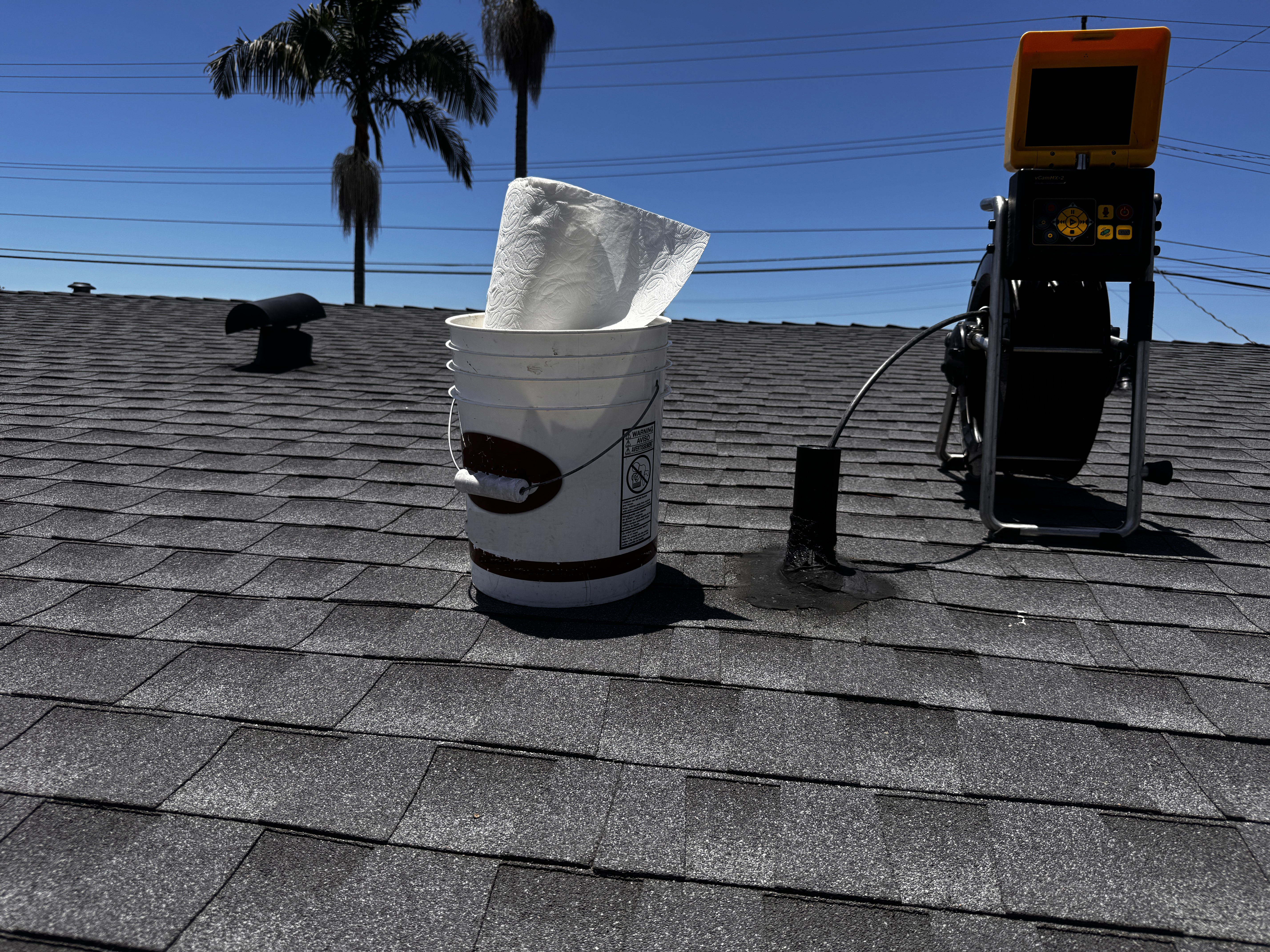
The things that turn up most often on an older line are the ones you cannot see any other way:
- Root intrusion at the joints — roots find the small gaps where a joint has shifted, then thicken year over year until they catch solids
- Offsets — sections that have moved against each other, leaving a ledge where debris collects
- Bellies — a low run where water stands instead of flowing through
- Scale and buildup — common in cast iron that has been in service for decades
- Cracked or failing wall — clay that has simply reached the end of its life
Distance, Not Depth
Every finding in a FlowPro report is located by cable distance from the access point, plus a mark on the surface. You will not find a depth figure anywhere in it, and that is on purpose.
Cable distance is counted off the reel as the camera travels. It is the same number today and next month. A depth reading comes from a locator picking up the sonde in the camera head, and it moves with soil conditions, moisture and how the locator is held. Publishing a depth means handing whoever digs a number to argue with when the hole comes up different.
Footage plus a surface mark is enough for a contractor to find the spot. It is also honest about what the equipment can and cannot tell you.
We do not quote the repair. FlowPro IE runs the camera and writes the report. We do not do the excavation, and we take no referral fee in either direction. Most companies offering a sewer scope in the Inland Empire also sell the fix — which means the report and the estimate come from the same pocket.
What You Get
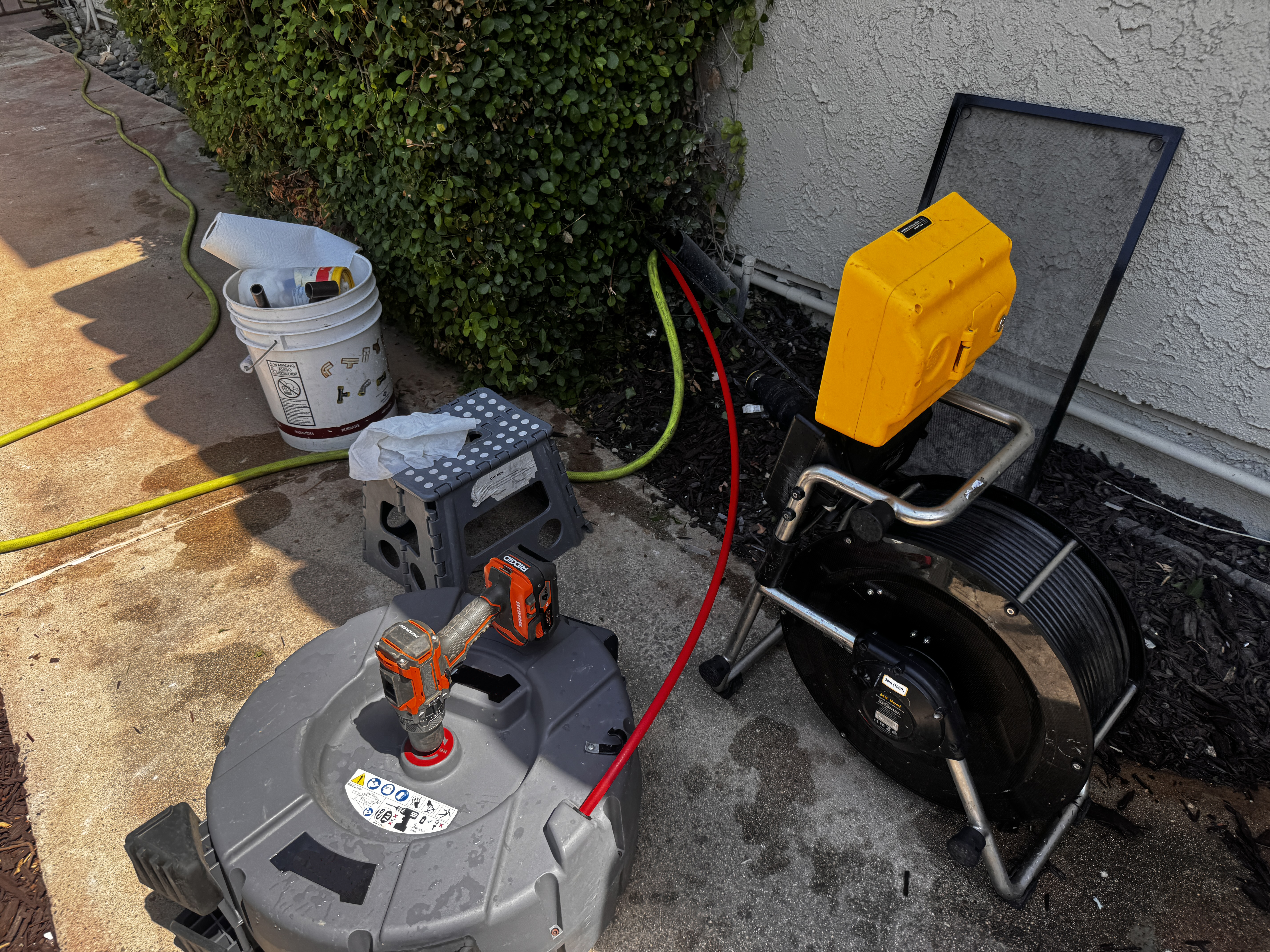
A verbal walkthrough on site before we pack up — what we saw, at what footage, and what it means — then a written PDF report with the full video emailed the same day. If you are in escrow, that report is leverage: it supports a repair request or a price adjustment, and it is documentation rather than an opinion. If you already own the house, it is a baseline, so the next scope tells you whether anything is actually moving.
When to Get One
- You are in escrow — a general home inspection does not cover the sewer lateral
- Drains slow, clear, and slow again within a few months
- Gurgling from drains or toilets when water runs elsewhere
- An unexplained damp or green patch in the yard or parkway
- The house is over thirty years old and nobody has ever looked at the line
- Mature trees stand between the house and the street
Serving Ontario and the Inland Empire
FlowPro IE covers Ontario and the surrounding Inland Empire, including Riverside, San Bernardino, Corona, Fontana, Rialto and Chino Hills.
Call 714-992-6363 to schedule, or to ask whether a scope is worth it on your particular house. We will tell you if it is not.
Schedule a Sewer Scope in Ontario
On-site walkthrough, same-day PDF report with the full video, and no repair quote attached.
714-992-6363 Call to Schedule